
Granny Flat Rules In Victoria – Dependent Person Unit
Breaking news · New rules from 15 October 2026
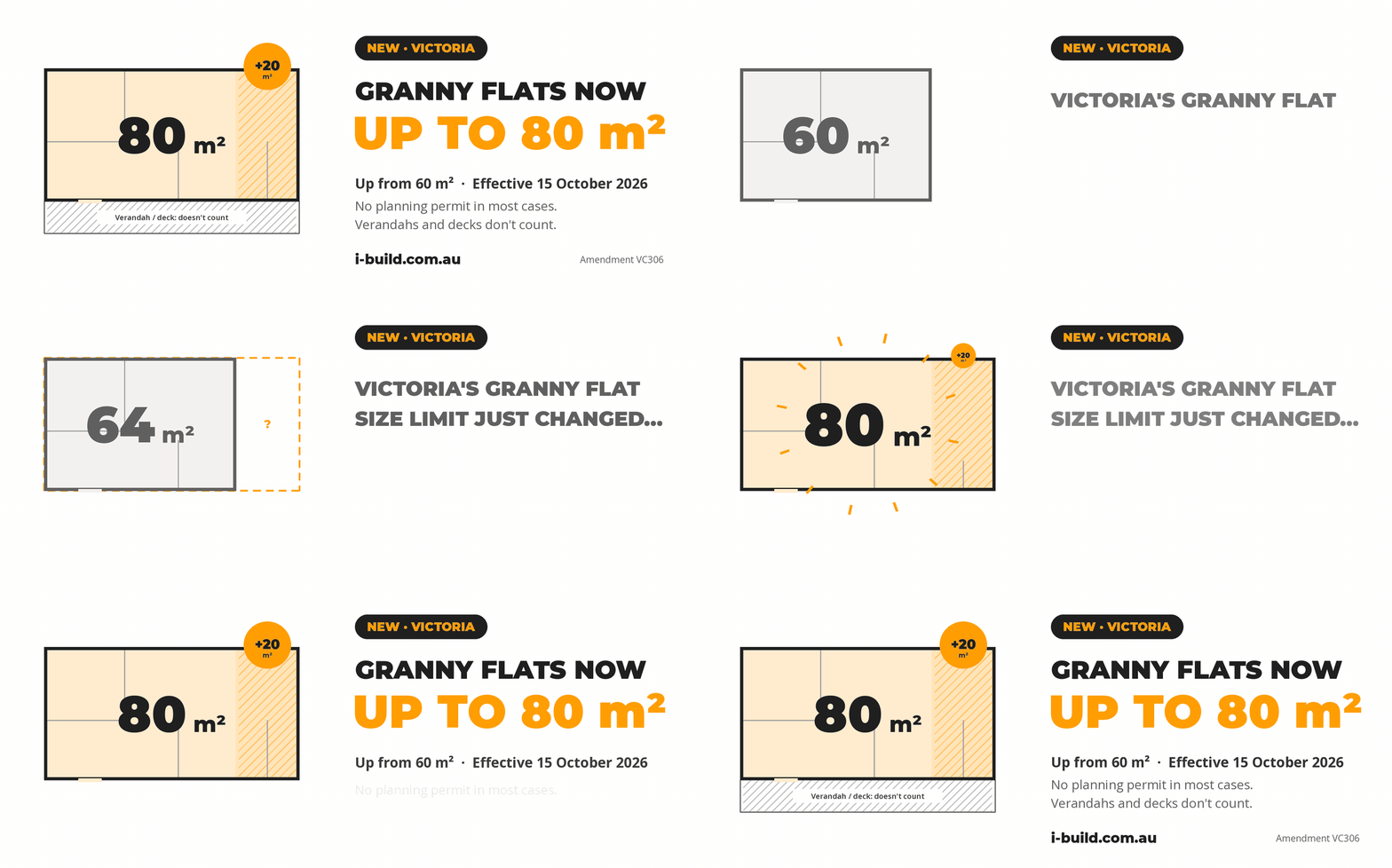
Victoria has raised the maximum size of a small second dwelling (granny flat) from 60 m² to 80 m². Amendment VC306 came into effect on 15 October 2026.
- 33% more room: up to 80 m², enough for a genuine two-bedroom layout.
- Measured to the outside of the walls. Attached verandahs, decks, porches and pergolas don’t count towards the 80 m².
- No planning permit in most cases, and the planning requirement for an access pathway has been removed.
- Still the same: one per lot, on the same title as the main home, no reticulated gas, and a building permit is always required.
The 80 m² limit is in the planning rules; the building regulations are being updated to match. Your building surveyor will confirm what applies to your site. Source: Planning Victoria.
Update, October 2026: Dependent person’s units (DPUs) have been replaced by small second dwellings. A small second dwelling can now be up to 80 square metres (from 15 October 2026), can be rented to anyone, and in most cases doesn’t need a planning permit. See the current Victorian granny flat rules.
What are the rules that apply to granny flats in Victoria?
“What are the regulations when it comes to granny flats in Victoria?
– Senthil, Pascoe Vale VIC
A granny flat in Victoria is often referred to as a Dependent Person Unit (DPU) by the Victorian government and councils. A DPU is a self-contained dwelling that is specifically designed to accommodate a dependent family member, such as an elderly parent or disabled relative. DPUs are similar to granny flats but are intended for use by a family member who is unable to live independently.
In Victoria, DPUs are classified as a type of granny flat and are subject to similar regulations. They are generally required to be located on the same property as the main dwelling and are limited in size to around 60-70 square metres (under the current small second dwelling rules the limit is 80 square metres, from 15 October 2026). DPUs must also meet the same building standards as any other dwelling and have their own separate access from the main dwelling.
One key thing to note is DPUs are intended to provide accommodation for a dependent family member and are not generally permitted to be rented out as a separate dwelling. The occupancy of a DPU is also subject to certain restrictions, and it may only be occupied by a dependent family member or their carer.
It’s important to note that the regulations surrounding DPUs may vary depending on the local council. If you’re considering building a DPU, it’s a good idea to check with your local council for specific regulations that apply to your area. If you are interested in learning more about a DPU (Detached Property Unit) and the process of applying for one from your local council, you can click here.